

You spent the weekend touring open houses in Washington, and every home you walked into had one thing in common: gorgeous hardwood floors that seemed to glow under the natural light. Then you checked the price per square foot and felt your renovation budget shrink in real time. That tension — between what you want and what you can spend — is exactly where Inhaus laminate changes the equation.
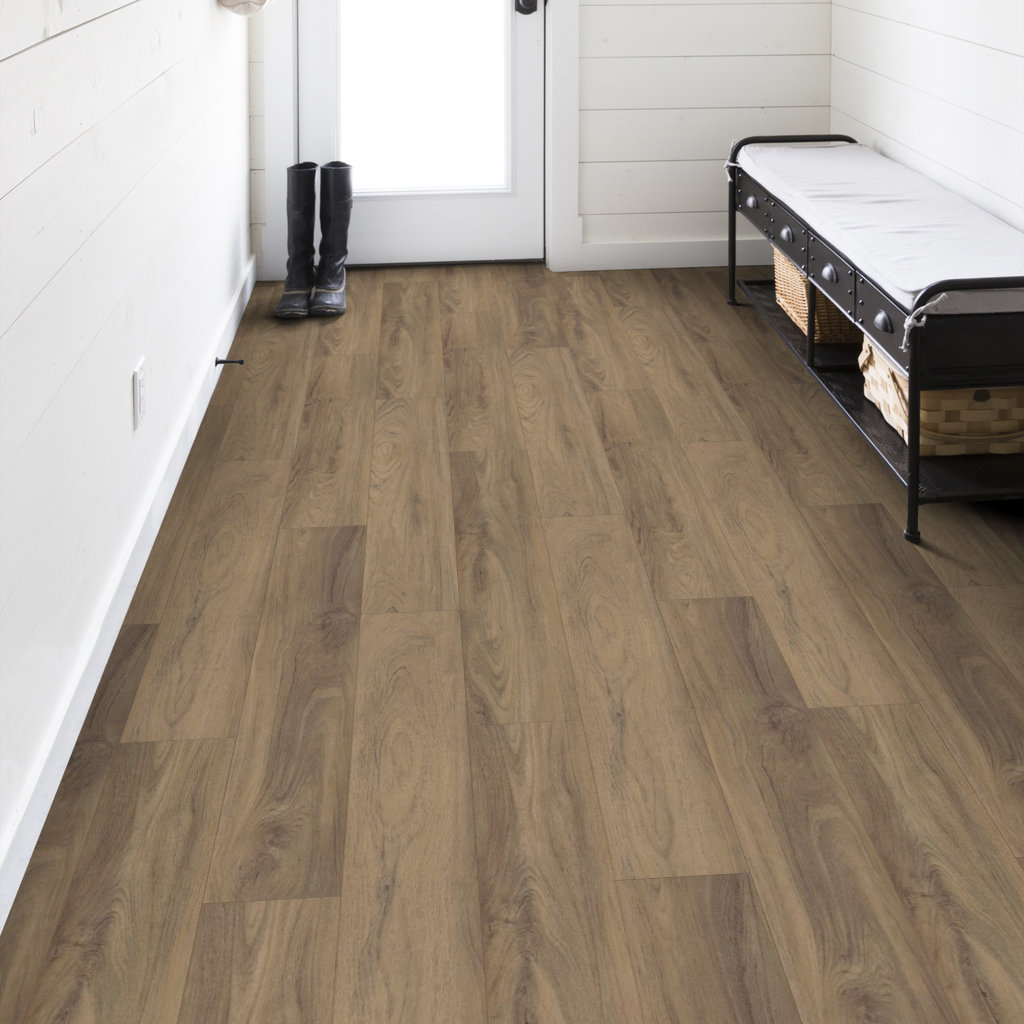
Inhaus laminate captures the grain, texture, and warmth of real wood so convincingly that even seasoned contractors do a double take. But unlike solid hardwood, it costs a fraction as much, installs faster, and handles the seasonal moisture swings of northwestern New Jersey far more gracefully.
Why Inhaus Stands Apart from Ordinary Laminate
Most laminate flooring comes from companies that treat it as a secondary product line — something to fill out a catalog. Inhaus takes the opposite approach. Based in Europe, the company builds its entire reputation on laminate engineering, and it shows in every plank.
The difference starts with the image layer. Inhaus uses high-definition photographic reproduction to capture authentic wood grain patterns — not the repeating, obviously fake motifs that gave early laminate its bad name. Each plank registers minute details: cathedral graining in oak, subtle mineral streaks in walnut, the gentle color variation you would expect from a natural material. When you browse the Inhaus laminate collection, the visual range spans from pale Scandinavian-inspired ash tones to deep, traditional hickory browns.
The embossing process matters just as much. Inhaus plank surfaces feature registered embossing, meaning the texture aligns precisely with the printed grain underneath. Run your hand across the board and you feel ridges where the image shows grain, smooth areas where it shows sapwood. That tactile dimension is what separates a convincing wood reproduction from a photograph printed on plastic.
Handling the Highlands Climate Without the Hardwood Headaches
Northwestern New Jersey homeowners know the drill: dry winter air from forced heating pulls moisture out of solid hardwood, opening gaps between boards. Summer humidity reverses the cycle, and those gaps close — sometimes with enough force to cup or warp planks. Engineered hardwood handles this better, but it still costs real money per square foot.
Inhaus laminate sidesteps the expansion-contraction problem entirely. The high-density fiberboard core stays dimensionally stable through temperature and humidity shifts that would stress natural wood. That stability makes it a practical choice for rooms where solid hardwood would be a gamble — finished basements in Long Valley colonials, mudrooms that catch road salt all winter, or kitchens where spills are a daily reality. Many of the wood-look laminate options in the showroom carry waterproof ratings, adding another layer of protection that hardwood simply cannot offer.
The surface wear layer also earns its keep in busy households. Inhaus planks meet commercial-grade AC ratings for scratch and scuff resistance, which means dog claws, dropped pans, and dragged dining chairs leave far less evidence than they would on a natural wood floor. You get the warmth of wood underfoot without the constant hovering.
The Design Payoff Without the Premium Price
Hardwood remains a beautiful investment — no question. For homeowners restoring a historic center-hall colonial or a century-old Victorian with original architectural details, the authenticity of solid wood makes sense. But for everyone else, the math favors laminate. Inhaus delivers the same visual warmth at roughly a third of the installed cost of mid-grade hardwood, and the money you save stays available for other projects.
That budget flexibility opens up possibilities. You could run consistent wood-look flooring through an entire main level instead of switching to sheet vinyl in the kitchen. You might pair new floors with a fresh coat of paint and updated trim — upgrades that a hardwood budget would have consumed entirely. The look is there. The performance is there. The price difference is real.
For a closer look at how Inhaus stacks up against other brands in the lineup, browse the brands we love or explore the full hardwood selection to weigh your options side by side. Our showrooms in Washington and Long Valley have Inhaus planks on display — seeing them under real lighting beats any photograph.
Ready to see the difference for yourself? Request your free estimate to discuss your project and get pricing tailored to your space.


