
If you live in a split-level home in Hackettstown, your stairs probably see more traffic than any other surface. Kids running between levels, pets chasing toys, guests coming in with wet boots in winter — those short flights of steps take a beating. Deciding between hardwood and laminate for those stairs is not just a style choice; it affects safety, noise, maintenance, and long‑term value.
Below is a practical breakdown to help you choose what truly fits your home and budget.
How Split-Level Layouts Stress Stair Surfaces
In a typical split-level, you have short runs of stairs right off the main entry. That means snow, road salt, and grit from the driveway end up on the treads all winter long. In the Highlands climate, dry indoor air in January and humid air in August add movement and moisture swings into the mix.
Engineered hardwood handles these seasonal changes better than solid wood, because the layered construction is more stable. If you like the idea of real wood underfoot, looking at engineered hardwood flooring for the treads can balance warmth with dimensional stability on those busy stairways.
Laminate stairs deal with a different challenge: the core needs to be well sealed at edges and nosings, because moisture tends to collect at the front of each step from wet shoes and mopping.
Hardwood Stairs: Pros, Cons, and Best Uses
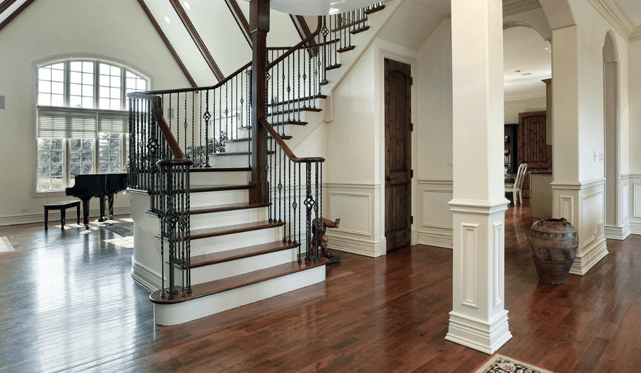
Hardwood stairs give split-level homes a timeless feel, especially if you’re updating original mid‑century railings and floors. You can match your stair treads to nearby oak hardwood options in the living or dining area, so the short flights between levels feel like one continuous design instead of separate zones.
On the plus side, wood treads can be refinished, which matters in a renovation‑active market like Hackettstown. Deep scratches from dog claws or dropped gear can often be sanded out instead of forcing a full replacement. Selecting textured finishes such as hand-scraped hardwood also helps hide everyday wear and provides a bit of extra grip underfoot.
The trade‑offs are cost and slipperiness. Hardwood stair systems typically run higher than laminate, especially if you coordinate new railings or landings. A good installer will also talk through nosing profiles and finish sheen so you avoid overly slick surfaces on steep runs.
Laminate on Stairs: Where It Shines in Split-Levels
Laminate makes sense in split‑levels where budget, pets, and constant traffic drive the decision. Modern wood-look laminate gives you convincing grain patterns without worrying as much about surface scratches from daily use.
For homes where the entry opens directly to a short flight of steps, water resistance becomes critical. Choosing waterproof laminate flooring helps protect the stair treads from melted snow, spring mud, and the occasional spilled drink carried between levels. That extra protection is especially helpful in winter, when road salt and slush can quickly damage unprotected edges.
Installation quality matters even more with laminate stairs than with flat rooms. Precise cuts around stringers, solid stair noses, and correct underlayment choices all affect creaking, flex, and long‑term durability. That’s where a team focused on flooring installation services can make a noticeable difference compared to a quick DIY job.
Coordinating Stairs with the Rest of Your Home
Many homeowners between Washington and Hackettstown replace floors in phases: first the main living areas, then the bedrooms, and finally the stairs once they start to look out of place. Instead of treating stairs as an afterthought, it often works better to plan them as part of a coordinated project.
Washington Flooring can tie new floors into matching staircase services, so treads, risers, and railings feel like they belong with the rest of the update. In split-levels, that kind of continuity makes the whole home feel calmer and more intentional, even when you’re working within a sensible, family‑focused budget.
If you’re weighing hardwood versus laminate for your own split-level stairs, it helps to see and touch the materials in person. Stop by the Long Valley or Washington showroom to compare options side by side, or request your free estimate and have a Washington Flooring specialist walk through your stair layout, traffic patterns, and budget with you.