

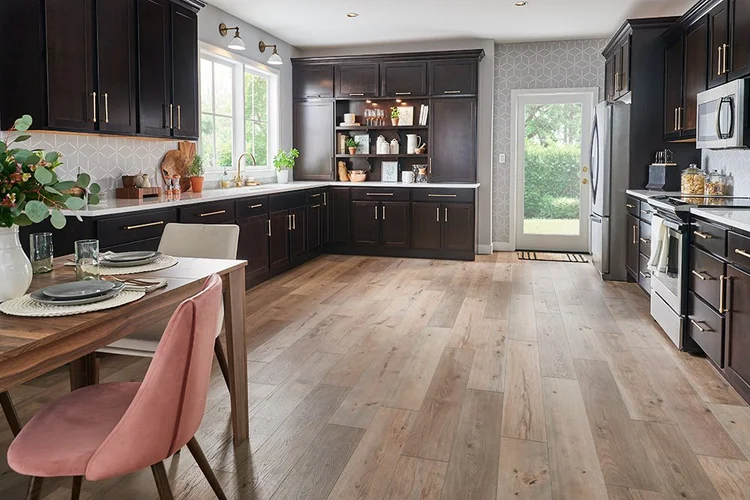
Good laminate in the right rooms rarely hurts what a New Jersey home sells for, and it can help by making the place show move-in-ready. The figure that surprises sellers sits at the other end of the question: the National Association of Realtors' 2022 Remodeling Impact Report found that refinishing hardwood floors recovers about 147 percent of its cost at resale, and new wood flooring about 118 percent, the two highest-returning interior projects it studied. Laminate carries no such published premium. But hurting resale and simply earning less than hardwood are two different things, and almost all of the worry lives in the gap between them. Here is the honest answer for a NJ seller, room by room.
The Short Answer for NJ Sellers
Quality laminate won't sink your resale, and in the wrong-for-hardwood rooms it's the smarter choice a buyer will appreciate. What actually drags a price down is flooring that's worn, dated or wrong for the space, and that applies to scratched old laminate, tired carpet and beaten-up wood alike. A clean, consistent laminate floor reads as a home that's been cared for, and that impression is worth real money at showing time.
The nuance is about where each material belongs. In the main living areas of a mid-to-higher-priced NJ home, real hardwood is still the resale champion, and the Realtors' cost-recovery numbers show why. In basements, high-moisture rooms, rentals and budget whole-house updates, good laminate is the sensible spend and won't cost you at closing. Match the floor to the room and the home's price, and the resale worry mostly disappears.
Where the "Laminate Hurts Resale" Idea Comes From
The bad reputation is real, but it belongs to a product that's largely gone. A generation ago, most laminate was thin and high-gloss, sounded hollow underfoot, and repeated the same printed grain every few boards, so buyers rightly read it as a cheap stand-in for wood. That memory is what makes sellers nervous today, and home buyers who remember those floors carry the same wariness.
Today's laminate is a different floor. The better lines are certified under the North American Laminate Flooring Association's ANSI/NALFA LF-01 standard, an independent, third-party program that checks a plank for wear, moisture, impact, light and stain resistance before it earns the seal. Its clear wear layer is armored with aluminum oxide, the mineral corundum, which rates a 9 on the Mohs hardness scale, so a good laminate shrugs off the scratches that used to make the category look worn within a year or two. Paired with a printed grain textured to match, a quality plank now reads as wood to most buyers at a glance, and often to an appraiser too. The myth is anchored to laminate that hasn't been sold in years.
What Actually Moves a Home's Price
In the rooms buyers judge first, real hardwood is the documented resale winner, which is the fact behind the whole worry. The Realtors' 2022 report put refinishing hardwood at about 147 percent cost recovery and new wood flooring at about 118 percent, and both give back more than they cost, which is rare, since most home projects return well under what you spend on them. Hardwood earns that because it signals quality, lasts for decades, and can be sanded back to new by the next owner.
The practical read for a seller is straightforward. If your home already has hardwood, refinishing it before you list is one of the highest-return moves on the whole menu, because you're paying only to renew wood you already own. If you're installing new floors in a main-level living area of a home priced where buyers expect wood, hardwood usually pays its way. Those are the spots where choosing laminate over wood could leave money on the table, and they're worth naming honestly.
Where Laminate Helps Your Sale
Laminate helps a sale in exactly the rooms where hardwood is a poor fit, and putting wood there would be a mistake buyers notice. The clearest case is below grade. Solid hardwood should not be installed below grade because the moisture rising through a concrete foundation makes it cup and gap, a rule the National Wood Flooring Association's guidelines spell out, while engineered wood and laminate can go on any level. A finished basement with a clean, warm laminate floor shows far better than bare concrete or musty old carpet, and it reads as usable square footage.
The same logic covers the wetter, busier corners of a house. In a mudroom, a laundry or an entry that takes wet boots all winter, a waterproof laminate holds up where solid wood would suffer, so it protects your resale rather than threatening it. For rentals and starter homes, durable laminate throughout matches what buyers at that price expect and looks consistent. And when the choice is replacing worn carpet across a whole house on a budget, one consistent laminate flowing room to room beats a patchwork of surfaces, because that flow is itself something buyers reward.
Where Hardwood Still Pays Back
Real wood still earns its keep at resale in the main living spaces of higher-tier NJ homes, where buyers expect it and the ROI data backs the spend. In many older Warren and Hunterdon County homes, there's original hardwood hiding under decades-old carpet, and uncovering and refinishing it is often the single best flooring investment a seller can make. If you're not sure what's under your carpet, that's worth checking before you spend on anything new, and we're glad to take a look. The hardwood side of this decision is worth reading in full: we covered what new hardwood does for resale value in NJ in its own guide.
The Real Rule: Condition and Consistency Beat the Label
What appraisers and buyers actually reward is flooring in good condition that flows consistently through the home, and that matters more than whether the box said laminate or oak. A house with tired, mismatched floors of any material shows poorly and invites lowball offers; a house with clean, consistent floors shows well and holds its asking price. So the resale question is less about laminate versus hardwood and more about whether the floor is in good shape and genuinely suits the room and the home's price.
Answer that question room by room and you'll spend your flooring budget where it actually returns. Put hardwood or a top-tier wood look in the living areas of a home that calls for it, put durable laminate where moisture or traffic rules wood out, keep the look consistent as you move through the house, and keep whatever you have maintained. Do that, and your floors help the sale instead of holding it back.
Questions NJ Sellers Ask About Laminate and Resale
Does laminate lower a home's value?
Quality laminate does not lower a home's value on its own. Buyers react to condition and fit far more than to the material name, so a clean, consistent laminate floor reads as move-in-ready. What lowers value is worn or dated flooring of any kind, including old laminate, scratched wood or tired carpet.
Do buyers prefer hardwood or laminate?
Buyers still prefer real hardwood in a home's main living areas, and the Realtors' cost-recovery data reflects that preference. In basements, laundries and other moisture-prone or high-traffic rooms, buyers accept and often expect a durable laminate, because they know wood is a poor fit there.
Is it worth replacing carpet with laminate before selling?
Replacing worn carpet with good laminate before selling is usually worth it, because clean, consistent floors show better and photograph better than dated carpet. The exception is a room with original hardwood hiding under the carpet, where refinishing the wood is the higher-return move.
Should I refinish my hardwood before I sell?
Refinishing existing hardwood before selling is one of the best-return projects available, recovering about 147 percent of its cost in the Realtors' 2022 report. You're paying only to renew wood you already own, and a freshly finished floor is one of the first things a buyer notices.
Is waterproof laminate okay in a basement for resale?
Waterproof laminate is a strong choice for a basement and helps resale there. Solid hardwood should not go below grade, so a warm, clean laminate over a proper moisture barrier turns a basement into finished-feeling space, which shows far better than concrete or old carpet.
Planning Your Floors With Resale in Mind
If a sale is on the horizon, the right flooring move depends on your home, your rooms and the buyers you'll draw, and it's rarely all one material. We're a family-owned shop that has helped Warren and Hunterdon County families buy, sell and stay put for decades, and we'll tell you honestly where real wood will pay you back and where a good laminate is the smarter dollar. You can browse the laminate we carry to see how far the wood looks have come, and spread the cost with financing if you're staging on a timeline. When you're ready, request a free in-home estimate and we'll walk the house, check what's under your carpet, and lay out the plan that sells.


